Broadcast brain: activated.
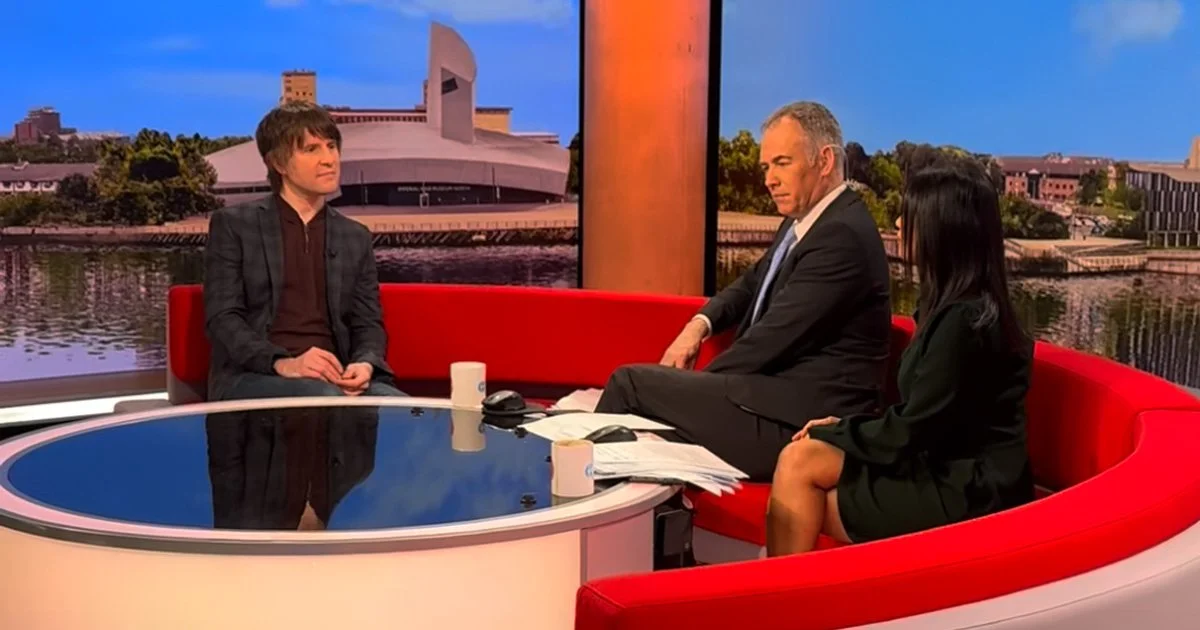
Activating my broadcast brain on the BBC Breakfast sofa
My kids have reached an age where they know swear words and think it’s edgy and cool to use them.
I’m a responsible parent, but also one who realises that swearing is a part of life. I explain to them that while grownups sometimes swear, learning when it’s appropriate and when it’s not is an important life lesson.
As an example, I explained that when I’m on TV or radio, one thing I absolutely must not do is swear. Doing so would mean I would never get invited back. It doesn’t matter that most of the people who work on the show, and most of the audience, swear sometimes. Live on air, it simply isn’t appropriate and could get me into trouble.
That got me thinking about ‘broadcast brain’.
What is broadcast brain?
People often ask me how I can speak clearly under the glare of studio lights, or into a radio microphone, or on an event stage. Don’t I get nervous and lose track of my thoughts?
The answer is no. When the ‘on air’ light activates, a switch flicks in my head, and ‘broadcast brain’ kicks in.
Suddenly, the noise and distraction of everyday life disappears, my voice becomes clearer, and my mind becomes focused on one thing: the conversation at hand.
It’s not just about swearing. It’s about being steady and clear with my communication, and being friendly and accessible whatever my mood that day. I suddenly find I can come up with analogies or turns of phrase off the top of my head that make complex topics seem simple to general audiences.
It’s suddenly all just there.
Like preparing for an exam (but a lot more fun)
Of course, it’s not just about how to say something. It’s vital to know what to say and to have a clear understanding of the topic at hand.
For this preparation, I go back to the exam revision of my school days. Back then I’d refresh my knowledge of a wide-ranging topic, and then boil it down to some bullet points. I’d then boil it down again until all of my knowledge on a topic could unfurl in my brain from just a small handful of one-line headings I could recite to myself as I entered the exam room.
I use the same process today if I’m asked to talk about about a technology story or trend.
I also make sure I have three clear points I want to make, whatever the topic. These are the things I believe the audience will find most valuable.
Don’t let a curveball smack you in the face
Regardless of what I want to say, I’m typically being interviewed by someone who has their own perspective, and their questions might be very different from what I’d expect to be asked.
Being ready for those curveballs is important. It’s common to expect one question but then instead get one that comes from a completely different angle.
In those curveball situations, it’s as much about knowing how to handle it as it is having a good answer.
And that’s where the focus of ‘broadcast brain’ comes in. It allows me to make an instant calculation: can I address the unexpected angle with anything useful? Or should I steer the conversation back to more familiar ground as quickly as possible without it looking like I’m dodging the question like a politician?
Like a light switch
Once you’ve learned to harness broadcast brain, it can be activated like a light switch. And that’s a good thing, because sometimes, an entire conversation can be a curveball.
Last summer, I was walking down the street when a BBC radio station called and asked me if I could take part in a debate about the benefits and drawbacks of a cashless society.
“Sure,” I said.
“Great,” came the reply. “We’re going live right after this song.”
There I was standing in a shopping street, live on the radio, debating a subpostmaster about going cashless, with zero preparation.
Of course, I had opinions and experiences I could draw on, but broadcast brain helped me make use of them in an engaging way at a moments notice.
Isn’t the human brain a wonderful thing?
_________
To book me for a TV or radio show, podcast, or onstage discussion, get in touch now